
Direct Surgeon Access
Ask your surgeon questions directly before and after your procedure.
 Dr. Daniel Gay, DO, FACOS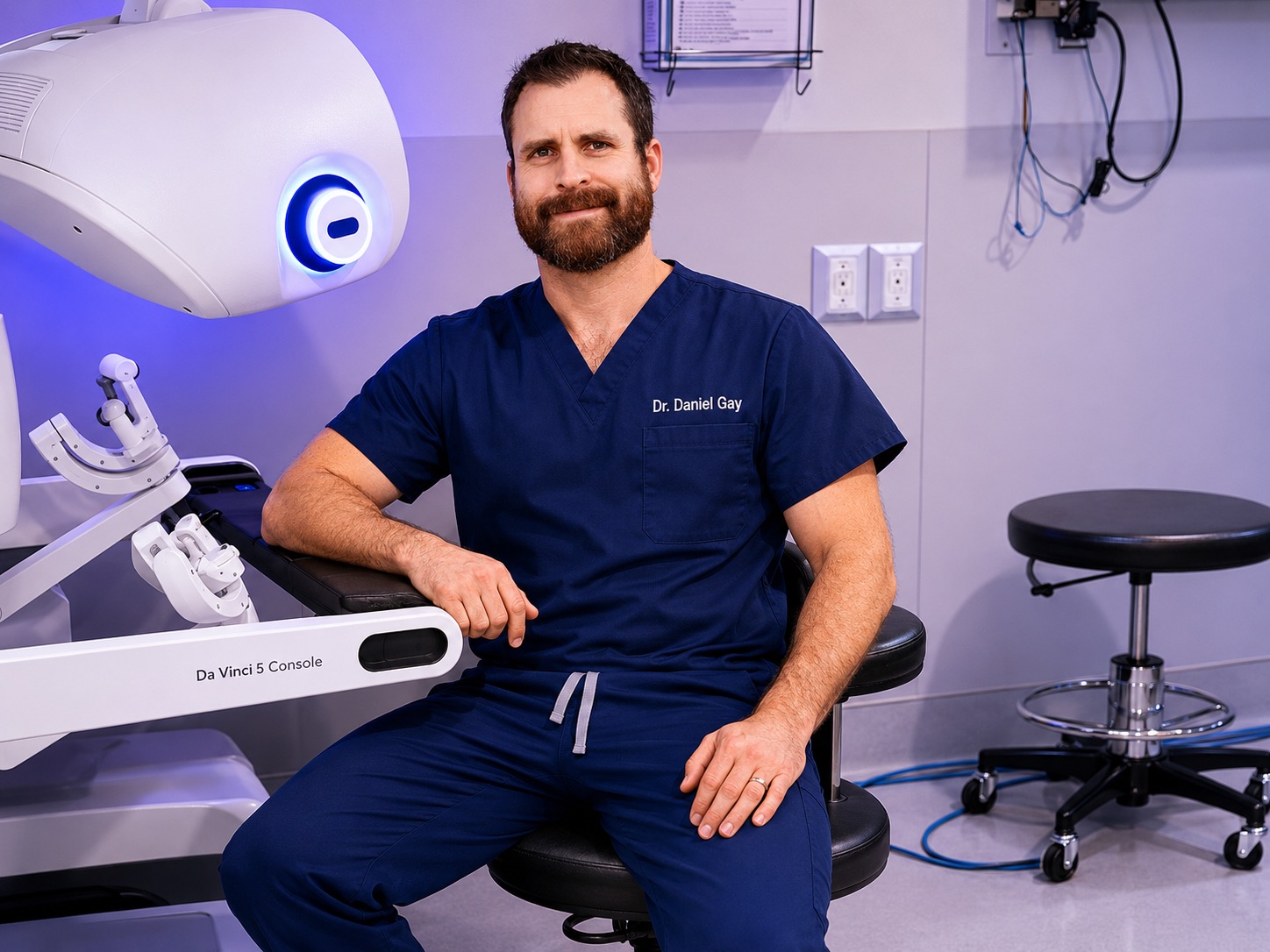
Dr. Daniel Gay provides robotic, laparoscopic, and open hernia repair for patients throughout Boise, Meridian, Nampa, Eagle, Kuna, Caldwell, Star, and the Treasure Valley.
Hernia care should be understandable, personal, and built around your goals. Dr. Gay’s independent practice keeps your surgeon involved at every step.
Ask your surgeon questions directly before and after your procedure.
Your surgical care is not managed by physician assistants or nurse practitioners.
An independent practice can often reduce delays between evaluation and treatment.
The same surgeon guides your evaluation, operation, and recovery plan.
Recommendations are focused on your needs, anatomy, and preferences.
Understand approach, mesh options, risks, recovery, and costs before deciding.

A precise diagnosis matters. The location, size, symptoms, previous repairs, and condition of surrounding tissue all help determine the right treatment plan.
A groin hernia that may cause a bulge, aching, burning, or discomfort with activity.
Explore inguinal hernia repairA hernia at or near the belly button that can enlarge or become uncomfortable.
Explore umbilical hernia repairA less common groin hernia that may have a higher risk of complications.
Explore femoral hernia repairA weakness through the abdominal wall that may appear away from a prior incision.
Explore ventral hernia repairA hernia that develops through or near a previous surgical incision.
Explore incisional hernia repairA hernia that returns after a prior repair and may require a tailored approach.
Explore recurrent hernia repairComplex repair planning for large, recurrent, or challenging abdominal wall hernias.
Explore abdominal wall reconstructionHernia symptoms can be subtle or disruptive. A surgical evaluation can confirm the diagnosis, assess risk, and help you understand whether monitoring or repair makes sense.
No single technique is right for every hernia. Dr. Gay discusses the tradeoffs and recommends an approach based on your anatomy, health, prior surgery, and goals.
| Repair option | How it works | When it may be considered |
|---|---|---|
| Open repair | The hernia is repaired through an incision near the hernia. | May suit many straightforward or complex hernias and selected no-mesh repairs. |
| Laparoscopic repair | Small incisions and a camera are used to repair the hernia from inside. | May offer a minimally invasive option for selected groin and abdominal wall hernias. |
| Robotic repair | A surgeon-controlled robotic platform supports precise minimally invasive repair. | Can be helpful for selected primary, recurrent, or more complex hernias. |
| No-mesh repair | The patient's tissue is used to close and reinforce the defect. | Appropriate only in select cases after considering recurrence risk and tissue quality. |
| Mesh repair | A surgical mesh reinforces the weakened area. | Often considered to lower recurrence risk, especially for larger defects. |

Mesh is one part of a complete repair strategy. The goal is to balance durable support with the needs and preferences of the individual patient.
A tissue-based repair may be an option for select hernias and patients after a careful discussion of benefits, limitations, and recurrence risk.
Permanent mesh options may include Parietene, ProGrip, and Ventralex ST. Each product has different characteristics and potential uses.
Products such as Phasix are designed to provide temporary reinforcement and gradually resorb over time.
Important: Not every mesh is appropriate for every patient. Final choice depends on hernia size, location, tissue quality, prior repair, infection risk, activity level, and surgical goals.
The Abdominal Core Health Quality Collaborative (ACHQC), formerly the Americas Hernia Society Quality Collaborative, is a national quality initiative focused on improving the value, safety, and outcomes of hernia and abdominal wall care.
“To maximize the quality and value of health care for patients who suffer from hernia disease and diseases of the abdominal wall or abdominal core.”
Source: ACHQC mission statement
HerQLes helps measure how a hernia and its treatment affect a patient’s day-to-day quality of life. Tracking patient-reported outcomes supports thoughtful follow-up and quality-focused care.
HerQLesHernia surgery cost varies with insurance coverage, deductibles, self-pay pricing, facility fees, mesh choice, anesthesia, and the exact procedure. Individualized estimates help you plan with fewer surprises.
Use the Surgery Cost CalculatorClear communication, direct access, and a well-explained recovery plan can make surgical care feel more manageable.
“I had a great experience with Dr. Gay as my general surgeon for my hernia repair. From the initial consultation through surgery and follow-up, everything was explained clearly.”Verified hernia repair patient
“Dr. Gay was very open to my needs and desires for my inguinal hernia repair, not wanting mesh and wanting dissolvable sutures.”Verified inguinal hernia patient
“My husband had hernia surgery that was in a difficult spot, but Dr. Gay went in with his robot and fixed him right up.”Verified robotic hernia repair review
Patients seeking an independent option can choose a practice built around direct surgeon access, no midlevel providers managing surgical care, faster scheduling, continuity, and personalized communication.
Explore an Independent Hernia Surgery AlternativeDr. Gay provides surgical evaluations and individualized hernia treatment plans for patients from Boise, Meridian, Nampa, Eagle, Kuna, Star, Caldwell, Middleton, Garden City, and neighboring Treasure Valley communities.
Whether you are newly diagnosed, comparing repair options, or seeking an opinion about a recurrent or complex hernia, the first step is a focused conversation with your surgeon.
General answers to help you prepare for a personalized conversation with Dr. Gay.
Adult hernias generally do not heal on their own. Some can be monitored, while painful, enlarging, or higher-risk hernias may benefit from surgical repair.
Schedule an evaluation for a new bulge, discomfort, pressure, burning, heaviness, or pain with lifting or coughing. Sudden severe pain, vomiting, or a firm bulge that will not reduce requires urgent care.
Robotic repair can offer advantages for selected hernias, but the best approach depends on the hernia, prior surgery, anatomy, and patient goals.
No. Mesh can reduce recurrence risk in many repairs, but select patients may be candidates for a no-mesh tissue repair.
Options may include polypropylene products such as Parietene, ProGrip, or Ventralex ST, and resorbable mesh such as Phasix. The choice is individualized.
A no-mesh repair may be considered in select cases after discussing anatomy, recurrence risk, tissue quality, activity, and goals with Dr. Gay.
Recovery varies by repair and patient. Many people resume light daily activities within days, with a gradual return to more demanding work and exercise.
Return timing depends on the operation and the physical demands of your job. Dr. Gay provides an individualized plan.
Some hernias remain stable, while others enlarge, become more painful, or develop incarceration or strangulation. A surgeon can help assess your individual risk.
Insurance often covers medically necessary hernia repair, subject to plan rules, deductibles, copays, and network benefits.
Cost depends on insurance, deductible, facility, anesthesia, procedure, and supplies. Use the surgery cost calculator to begin planning.
The Abdominal Core Health Quality Collaborative is a national initiative focused on improving the value, safety, and outcomes of hernia and abdominal wall care.
HerQLes is a patient-reported quality-of-life tool used to understand how a hernia and its treatment affect daily life. Learn more about HerQLes.
Meet directly with Dr. Gay to understand your diagnosis, repair options, recovery expectations, and next steps.
Watch this brief overview, then bring your questions to your visit.
This guide supports an informed conversation with a surgeon. Recommendations must be individualized after examination and review of relevant records.
A hernia is a defect in fascia that allows fat, bowel, or another structure to protrude beyond its normal compartment.
Hernias may enlarge or become painful with pressure. Incarceration traps contents; strangulation compromises blood supply.
History and examination are often sufficient; ultrasound or CT helps with occult, recurrent, or complex defects.
A hernia does not usually heal with medication. Nonsurgical management can include watchful waiting for selected minimally symptomatic patients, activity modification, treatment of cough or constipation, smoking cessation, nutrition, glucose control, and weight or fitness optimization before surgery.
Open, laparoscopic, robotic, mesh, selected no-mesh, permanent, biological, and absorbable-mesh strategies are matched to the individual.
Repair risks include bleeding, infection, seroma, urinary retention, injury to bowel, bladder, vessels, nerves, or spermatic structures, chronic pain, numbness, mesh-related complications, recurrence, conversion to open surgery, and anesthesia complications. Risk varies substantially by anatomy and prior operations.
Recovery depends on the exact procedure, disease severity, health, work demands, and whether additional treatment is needed. Before treatment, discuss expected pain control, wound care, activity, diet, pathology results, follow-up, and the symptoms that should prompt a call.
Urgent care: Call 911 or seek prompt evaluation for severe or rapidly worsening pain, heavy bleeding, trouble breathing, repeated vomiting, fainting, rapidly spreading redness, or another emergency.
Bring relevant imaging, pathology, laboratory results, medication lists, prior operative reports, and your questions when available.